

Maya and Dev are an illustrative couple, invented for this case study and not real FairShare users, but their argument will sound familiar. Dev did plenty of chores and believed the work at home was split evenly. Maya did the noticing, planning and remembering that kept those chores coming. They started to share the mental load once that thinking was written down as cards, each with one named owner from first thought to finished job, and reviewed in a short check-in every Sunday.
Before: Dev did the chores, Maya did the thinking
Maya is a hospital pharmacist on a rotating shift pattern. Dev manages freight schedules for a logistics firm and works from home three days a week. Their kids, Leo and Ada, are seven and three. On paper Dev's week looked full: dishes every night, both bins, bath time, the Saturday grocery run, and most of the laundry since a truce they'd made the previous spring. When Maya said she was worn out, he could point to every one of those jobs, and he was right about all of them.
What he couldn't point to was the other list, the one in Maya's head. Ada's shoes were pinching. Swim lesson re-enrollment opened on a weekday morning and filled fast. The school wanted a signed trip form and cash in an envelope. The pediatrician had asked for a follow-up after Leo's ear infection. Dev shopped every Saturday from a grocery list Maya had been adding to all week, and on a busy shift she would catch herself at the pharmacy counter wondering whether there was bread for Monday's lunches. A 2025 working paper on arXiv has a name for that last habit: mental load spillover, meaning you think very often or always about household organization during the workday.
None of this makes them unusual. In Pew Research Center's June 2026 survey of parents who both work full-time, 43% said the mom does more of the household chores, 17% said the dad does, and 40% said it was about equal. Dads were much more likely than moms to call the split even, and how satisfied parents felt depended heavily on whether it really was. The sociologist Allison Daminger, drawing on interviews with more than 170 people in more than 80 couples, found that women carry most of the cognitive labor, down to noticing the food is running low and writing the grocery list, even in couples who set out to be equal.
Time-use surveys catch part of the gap. In the 2025 American Time Use Survey, women averaged 2.38 hours a day on household activities and men 1.58. Maya wondering about bread while she checked a prescription would never show up in a time diary.
Dev bought the milk every Saturday. Maya was the one who knew they were nearly out.
Why use an app instead of having the same mental load talk again?
They'd had the talk before, usually after ten at night. Maya listed what she was holding, Dev heard it as a verdict on him, they agreed to both try harder, and within a fortnight things slid back. The laundry handover had given her some evenings back. It hadn't changed who remembered that Leo's PE kit needed to be clean by Thursday.
Research from the University of Bath and the University of Melbourne found the same pattern. In a 2025 study of 2,133 partnered US parents, mothers who had jobs or earned more did less physical housework, but their share of the planning, remembering and organising stayed where it was. Swapping chores only moves the work everyone can already see.
So Maya went looking for something that showed the rest. Most of what she found were chore charts with points and streaks, which felt like a new way to keep score. FairShare borrowed an idea she knew from the Fair Play method: every piece of household work becomes a card, and each card names who owns the noticing, who owns the planning and who does the job. The app calls these Conceive, Plan and Execute. Our guide to mental load apps for iPhone that go beyond chore charts explains why that framing holds up better than tallying tasks.
Dev agreed to try it for two reasons he was happy to admit. It was free, and it offered a fixed fifteen-minute check-in each week in place of open-ended talks that started when they were both exhausted.
What they set up in the first week
Maya started alone, on a Tuesday after both kids were asleep, with Brain Dump. She typed the way she thinks at that hour: shoes Ada, swim re-enroll, dentist both kids, Leo party RSVPs x3, recycling day moved to Thurs, car registration, school photo money, call Mom re Thanksgiving. No order, half-sentences. Brain Dump sorted the pile into separate cards she could edit. The list ran longer than she'd have guessed, and for a while seeing it all at once made her feel worse.
Next they wrote what "done" means on each card, the idea Fair Play calls a minimum standard of care. This is where they found disagreements neither had said out loud. To Dev, the Lunches card meant making sandwiches each night. Maya's version started on Sunday evening with knowing what was in the fridge. For Kids' shoes they wrote: each child has one school pair and one spare that fit, checked at the start of every season. Writing that down ended an argument about shoes that had been running for a year.
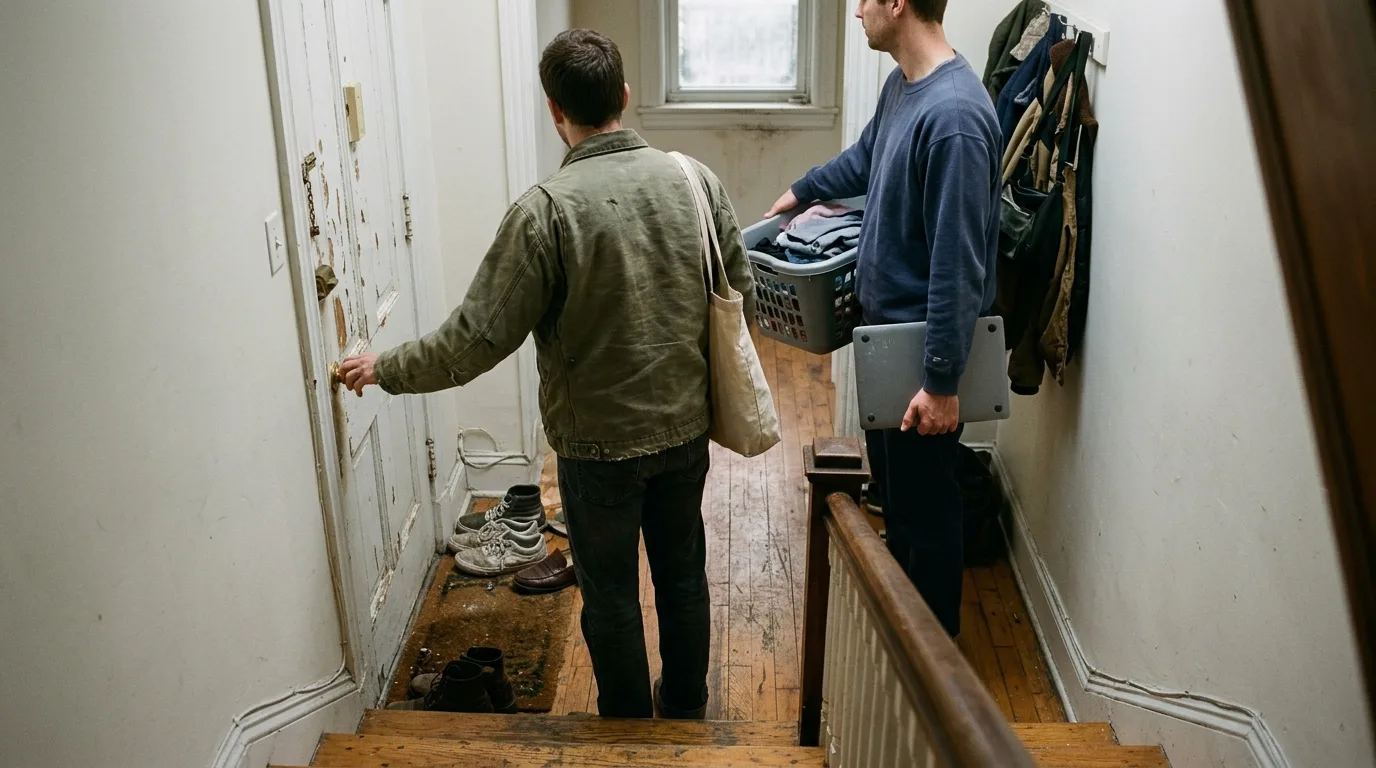
Then she invited Dev. The invite arrives as a link; he tapped it on his own phone, the app opened, and he was in their household with every card already there. That Sunday they sat on the stairs while the kids watched a film and claimed cards. Dev took Groceries end to end, list included, so the Conceive line now carried his name. He took Swim lessons and the Car, re-enrollment dates and registration renewal with them. Bath time stayed his to do, and he picked up the noticing on it as well, so running out of kids' shampoo became his problem. Maya kept School forms and Medical, the two she wanted to hold.
Dev also added cards Maya hadn't listed, because they were his own invisible work: the taxes, the home insurance renewal, fixing whatever broke. Those cards mattered. A picture that only counted Maya's load would have read like a case against him. If you're about to set up your own household, our tips for your first two weeks with FairShare walk through this stage in more detail.
What changed once they could see who was carrying what
The first change came before anyone did anything differently. FairShare shows who is carrying what across all the cards, and when they looked at that view together, most of the Conceive column had Maya's name on it. Dev had heard the same claim many times, always as an accusation. Seeing it as a column on a screen, he started moving his name into it.
The weekly check-in did the rest. They held it on Sunday after bedtime and worked through the prompts: what shifted this week, any swaps, any changes to what done means, anything to renegotiate. In the first week Dev's grocery run came back without lunch supplies, because his list covered dinners and nothing else. On a Tuesday night that would have turned into a fight about whether he was paying attention. At the check-in they edited one card's done line to add lunch items for the school week, and the next Saturday those were in the cart.
On a Tuesday night that would have been a fight. At the check-in it was an edit to one card.
Over the following weeks the change Maya noticed most was a quiet one. The bread question stopped following her to work, because bread had an owner and it was Dev. They still disagreed, but now in fifteen minutes on Sunday instead of the kitchen at ten at night, and about a card instead of about which parent was more tired. Our guide to running a weekly household check-in that doesn't blow up covers the format they settled into.
Where FairShare didn't help
Setup takes time. The first Brain Dump took an evening, sorting cards and agreeing done lines took most of a Sunday, and Maya did the first pass alone, which is itself a piece of mental load. Don't expect relief in the first week. For Maya and Dev it came once the cards had owners and the check-ins had a rhythm.
The app also can't make a partner engage. If Dev had ignored the invite link, FairShare would have become one more list Maya kept current, the exact job she was trying to put down. When one partner won't look, start with the conversation and add the app afterward. Our piece on how to bring up the mental load without starting a fight is the better first step in that case.
Some of their strain had nothing to do with cards. Maya's rotating shifts still make some weeks harder than others, and dividing the home fairly doesn't change her rota. Pew found that 62% of full-time working moms and 47% of full-time working dads say balancing work and family is difficult. The app changed who handled what at home and did nothing for the length of either workday.
Couples who already divide things well, and both agree they do, will get less out of it. If neither of you keeps a running list in your head, the app has little to bring to the surface.
How do you share the mental load with your partner?
Their advice comes straight from what tripped them up.
- Hand over whole cards. If you take only the doing, your partner is still the manager and the load hasn't moved.
- Write the done line before you argue about the work. Many of their fights turned out to be two definitions of the same job.
- Let the partner carrying more run the first Brain Dump, then let the other add the work nobody had counted.
- Hold the check-in on the same day every week and keep it short, so problems wait for Sunday instead of boiling over midweek.
- Expect the first few days to feel worse. Seeing the whole list is uncomfortable, and you need to see it before you can divide it.
FairShare didn't turn Dev into someone else. He was already willing to do the work. He couldn't see the part he wasn't doing until the cards showed it to him.
Common questions
What is the mental load in a relationship?
How do you share the mental load with your partner?
Why doesn't swapping chores fix the mental load?
What do Conceive, Plan and Execute mean in FairShare?
Is FairShare free?
Sources
- How working parents divide family responsibilities
- Working parents report (PDF)
- Successful career women still shoulder the majority of the 'mental load' at home: new research
- Women carry a household's mental load. Now, a Wisconsin researcher has receipts.
- Beyond Time: Unveiling the Invisible Burden of Mental Load
- American Time Use Survey - 2025 Results
Keep reading
More FairShare guides

Written by the FairShare team. Drafted with AI assistance and reviewed by a human editor before publishing.