
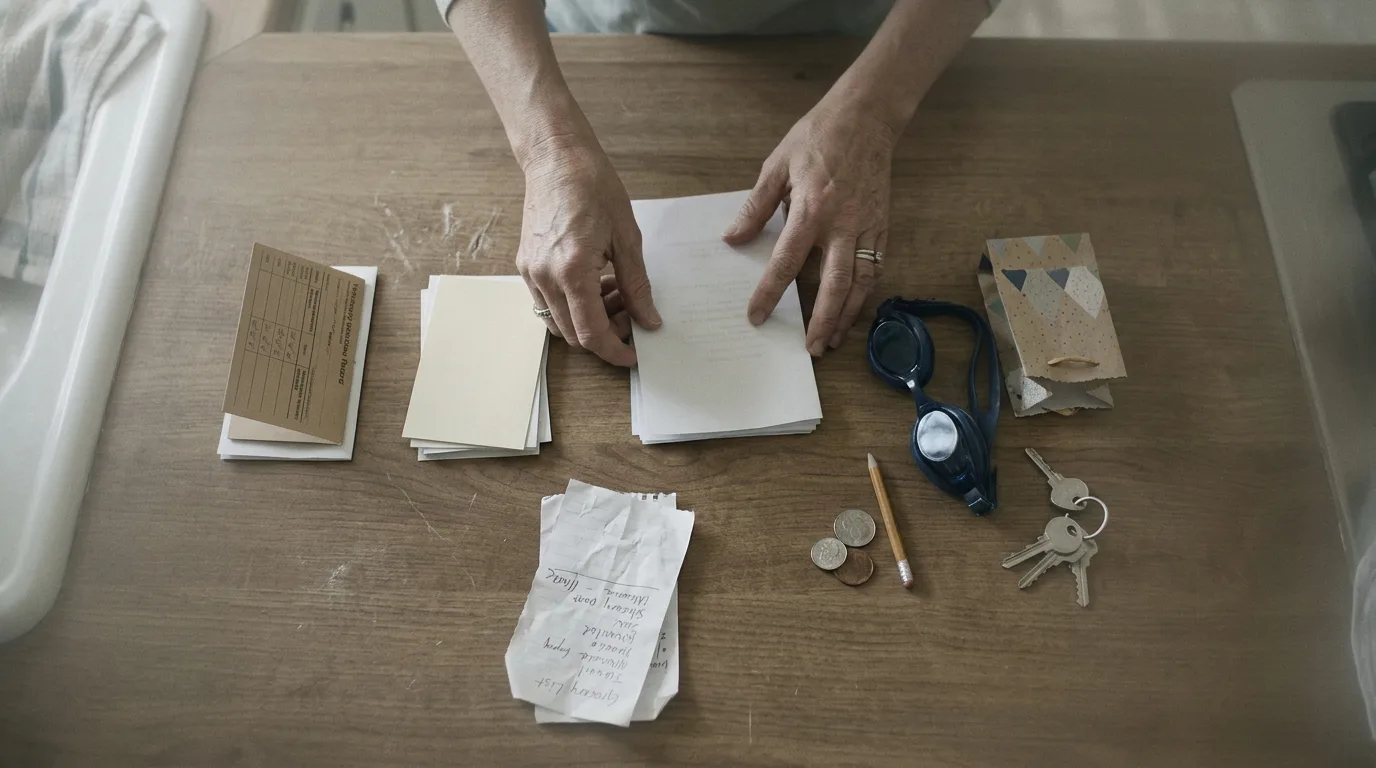
Most couples who download a mental load app start by splitting chores. You take laundry, I'll take dishes. Then the same person keeps noticing that the detergent is low, the permission slip is due and the dog needs its booster. These tips take you through your first two weeks with FairShare in an order that fixes that. You empty your head first, write down what finished looks like, hand over whole jobs instead of errands, and end the first week with a 15-minute check-in. This is for the partner who does most of the remembering and wants the other one to own things for real.
What you'll have after your first two weeks with FairShare
- FairShare on your iPhone (it's free), and an iPhone for your partner, since FairShare is an iPhone app
- An evening on your own for the Brain Dump, before your partner gets involved
- Your partner's rough agreement that the split is worth looking at, even if they don't see the problem yet
- A recent dropped ball you can mention without blame, like a missed dentist recall
- A weekly slot you can both protect for the check-in
Start with a Brain Dump before you involve your partner
Step 1: Empty your head into Brain Dump
This is the part of running a home that rarely gets split. Sociologist Allison Daminger breaks cognitive labor into four steps: anticipating what's coming, identifying options, deciding, and monitoring the result. In a University of Bath and University of Melbourne study of 2,133 US parents, mothers reported 67% more household management than fathers, with the widest gaps in scheduling, managing social relationships and food planning. Visible housework has shifted. NBC News found US men spent a record 100 minutes a day on household activities in 2024. The noticing hasn't moved with it.
If you stall after the obvious items, scan the mental load checklist for couples. It covers the categories people forget, like gifts, car upkeep and the kids' friendships.
Write what 'done' means on every card
Step 2: Give each card a finish line
Step 3: Put Conceive, Plan and Execute with one owner
The thinking work is where couples drift apart without noticing. In a study of 3,000 US parents by Weeks and Ruppanner, reported by the British Psychological Society, mothers reported doing 71% of the cognitive household tasks studied, compared with 45% for fathers. A card that names one owner for every stage and spells out 'done' leaves no room to assume the other person has it.
Send the invite when your partner can actually look at it
Step 4: Invite your partner with one tap
Don't send the link cold. One line of context does more than the app can: 'I put everything I keep track of into this. Can we look at it together Thursday?' That frames it as a shared project rather than a bill. If you expect pushback, read how to bring up the mental load without starting a fight before you hit send.
Let your partner pick cards before you assign any
Step 5: Deal the cards together, partner first
Aim for a split you both call fair, not one that looks even. In Pew Research Center's 2026 survey of different-sex couples where both parents work full time, 43% said the mom does more of the household chores and 40% said it's about equal. Moms were more satisfied when chores were shared about equally than when they did more. Fair Play, which FairShare draws on, uses 100 task cards, and each card's holder owns that task completely. Eve Rodsky stresses that fair doesn't have to mean 50/50. One of you might hold fewer cards because yours are heavier.
Check who's carrying what before you call it even
Step 6: Read the split by weight, not count
Researchers writing in Archives of Women's Mental Health found that cognitive household labor is more gendered than physical labor, and linked it to women's stress, depression and burnout. A simple card count hides exactly that work.
Keep the weekly check-in to 15 minutes
Step 7: Run your first check-in at the end of week one
The short limit is a feature. It stops the check-in turning into a week of saved-up complaints, and small slips get raised while they're still small. For scripts, and for what to do when a check-in goes sideways, see how to run a weekly household check-in that doesn't blow up.
When a mental load app isn't the answer
FairShare works when you both agree the split is worth looking at. If your partner thinks the house runs itself, an invite will read like a performance review and the cards will sit unopened. Have the conversation first. How to talk to your partner about mental load without a fight covers how to open it.
If your arguments have moved past logistics into resentment a 15-minute check-in can't hold, see a couples counselor before you try any app. And if all you want is reminders for chores you already agree on, a shared to-do list does that with less setup. FairShare is for when the problem is invisible ownership, not a missing list.
Questions that come up during setup
Common questions
My partner says 'just tell me what to do.' Is that good enough?
Do we need to use every Fair Play card?
The invite opened Safari instead of the app. What now?
What if the owner lets a card slip?
Sources
- Mothers report taking the brunt of household mental load
- Successful career women still shoulder the majority of the 'mental load' at home: new research
- Women carry a household's mental load. Now, a Wisconsin researcher has receipts.
- U.S. men are contributing a record-high 100 minutes of housework per day, but women still do more.
- How working parents divide family responsibilities
- My Husband and I Tried the 'Fair Play' Cards—And Here's What Happened
- Cognitive household labor: gender disparities and consequences for maternal mental health and wellbeing
Keep reading
More FairShare guides

Written by the FairShare team. Drafted with AI assistance and reviewed by a human editor before publishing.