
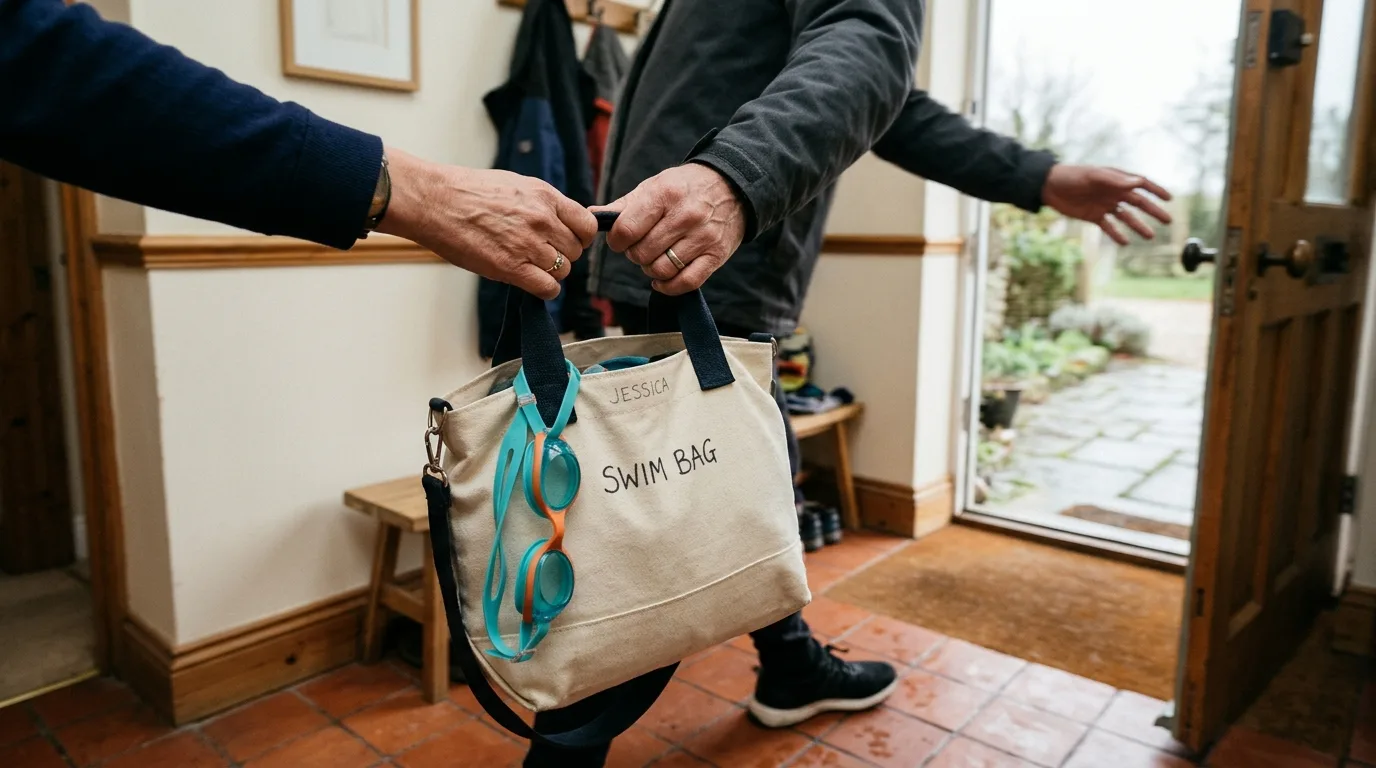
At 3:40 on a Tuesday, halfway through a budget review, Priya remembered that swim lesson enrollment opened that night. The Saturday slot always filled within minutes. She'd been promoted in the spring. Her partner Dan had taken over most of the school runs and half the cooking. On paper, the split looked fair. In her head, nothing had moved. If you're one of the working parents still carrying the household's mental load after the chores have been shared out, here is what fixed it for them. They named every invisible task, gave each one a single owner from noticing to finishing, and checked in for 15 minutes a week.
Priya and Dan are an illustrative couple, a composite built from the situations the research describes, not real customers. Their son is seven. The app they use is FairShare, a free iPhone app from Culi that turns the work of running a home into cards two partners can see, own and split.
Why the mental load stays uneven when both parents work
Priya's situation is the pattern, not the exception. In Pew Research Center's June 2026 survey of different-sex couples where both parents work full time, 43% said the mom does more of the household chores, 17% said the dad does, and 40% said it's about equal. Among the mothers in those couples, 63% said they personally handle more of the day-to-day parenting, and 63% said the same about chores.
Earning more doesn't shift the planning much either. A University of Bath and University of Melbourne study of 2,133 US parents found mothers report 67% more household management than fathers. The widest gaps were in scheduling, managing social relationships and food planning. Mothers earning over $100,000 reported 30% less childcare and 17% less housework than lower-income mothers, and no less mental labour. The researchers call it “gendered cognitive stickiness.” Priya's promotion bought her fewer pickups. It didn't buy her a quieter head.
Part of the problem is that this work barely shows up when anyone measures it. In the 2024 American Time Use Survey, household management averaged about 9 minutes a day across the population. Nobody logs “remembered swim enrollment during a meeting.” Sociologist Allison Daminger, whose book WPR covered in 2025, breaks cognitive labour into four steps: anticipating a need, identifying options, deciding, and monitoring the result. Dan was doing plenty. He was doing the part that comes after those four steps.
Why a shared to-do list didn't fix it
Their first try was a shared note on their phones. It faded within a couple of weeks. Dan checked things off faithfully. “Dentist” got done because Priya had booked it, added it to the list and reminded him that morning. Every tick was his. Every bit of remembering was hers, and the note had no place to show it.
The list recorded who finished tasks. It said nothing about who had thought of them.
When they finally talked about it, Dan's honest view was that things were roughly even. He wasn't wrong about his hours. He also handled the big one-off jobs: refinancing, buying the car, the water heater that died in February. Researchers see this split too. A Journal of Marriage and Family study, summarised by the British Psychological Society, separates “core” cognitive tasks, the ongoing ones mothers mostly carry, from “episodic” one-off tasks where fathers report doing more. Episodic work is memorable. Core work is constant, and nobody notices it until it's missed.
That gap in how each of them saw the split mattered on its own. A University of Queensland study of 235 couples found the further apart partners' views of the division were, the worse their relationship quality, and the pattern was clearest for cognitive load. A study led by Verena Klein, reported by PsyPost, found mental load predicted women's romantic and sexual satisfaction more strongly than who does the cleaning and cooking. In that data, men agreed that women carried more. Priya and Dan didn't need to settle an argument about hours. They needed to look at the same picture.
Getting it out of one head with Brain Dump
On a Sunday night, after their son was asleep, Priya opened FairShare and started with Brain Dump. She didn't organise anything. She typed the way the thoughts arrived: swim re-enrollment, dentist recall, Grandma's birthday gift, picture day form, the dripping outdoor tap, who's hosting Thanksgiving, sunscreen at school running low, car registration, new rain boots because his toes are at the end. The AI sorted that mess into separate cards she could look over and edit.
It went faster than she expected and took longer than she wanted, because once she started, more kept surfacing. If you stall, this list of invisible tasks couples forget to count is a good prompt for the ones that hide in plain sight.
Then she sent Dan the invite. It's a link. On his iPhone, with FairShare already installed, it opened straight into their shared household. Without the app, the link opens in Safari with a banner to get it first. The better moment came when Dan added cards of his own: the furnace filter, the car's service schedule, the password manager renewal. Priya hadn't known those were his. Nobody was keeping score. For the first time, both piles sat in one place.
Splitting the cards: who notices, who plans, who does
Every FairShare card splits ownership into three parts: Conceive, Plan and Execute. This is the Fair Play idea the app borrows. Whoever owns a task owns all of it, from noticing it needs doing to getting it done. Swim lessons had been split by accident. Priya noticed enrollment was coming (Conceive), picked the slot and paid (Plan), and Dan drove on Saturdays (Execute). Dan thought he owned swim. He owned the car ride.
They gave the whole card to Dan. Then they wrote down what “done” means, which is where the real conversation happened. For swim, done meant enrolled in the Saturday morning session before it fills, the bag packed Friday night with goggles that still fit, and the next enrollment date known ahead of time. That last line was the one Priya had carried alone for years.
In Fair Play terms, that written baseline is the Minimum Standard of Care, or MSC. The owner is measured against a standard you both agreed on, not one that lived only in the other person's head. Dan's version of “packed” had been a towel. Priya's included a snack and a spare cap. They settled in between and put it on the card.
The view of who's carrying what did the rest. Side by side, it was plain that Priya held most of the every-week cards and Dan held most of the occasional big ones. Nobody had to make a case. They moved swim, the dentist, school forms and weeknight dinner planning to Dan, each with all three parts attached.
What the 15-minute weekly check-in actually looks like
They set the check-in for Sunday after dinner, standing at the counter with a timer running. FairShare's prompts walk through what shifted that week, any swaps, MSC updates, and anything that needs renegotiating. The first one ran well over. Priya wanted to explain why each card mattered, and Dan wanted to explain everything he'd been doing all along. By the third week it fit in the time.
Week two was the real test. The picture day form went back a day late, and it was Dan's card. In the old setup, Priya would have caught it, filled it in herself and quietly stopped trusting the system. This time it came up under what shifted. Dan added “check the backpack folder Monday and Wednesday” to the card's definition of done. That's a renegotiation. It took a couple of minutes, and nobody raised their voice.
Swaps happen too. During a heavy month at work, Priya handed weeknight dinners to Dan and took the weekend grocery run instead. They agreed it was temporary, wrote it on the cards and set a date to look at it again. For a fuller playbook, see how to run a weekly household check-in that doesn't blow up.
A couple of months in, the Tuesday-at-3:40 moments had thinned out. They hadn't stopped. Priya still remembers Grandma's birthday, because that card is hers and she wants it. What changed is that she knows which things are hers to hold. The rest she can let go of, because someone else has them, start to finish.
When FairShare isn't the right fit
An app made the split visible for Priya and Dan because both of them were willing to look. It won't do that work for you in every situation.
- If your partner thinks the split is fine and won't open the app, cards won't change their mind. Have the conversation first. This guide on how to bring up the mental load without starting a fight is a better place to start than an invite link.
- If the strain is years of built-up resentment rather than a task list, a 15-minute check-in isn't therapy. See a couples counsellor first.
- FairShare is an iPhone app, so you'll both need one before you build your household in it.
- If all you need is a shared shopping list or calendar, an ownership system is overkill. FairShare earns its place when the question is who is responsible for remembering.
Tonight, before you open anything, write down five things you'd remember in the middle of a work meeting. Then open FairShare, put them into Brain Dump, and send your partner the invite. If you want every tap spelled out, the FairShare setup guide walks from first open to first check-in.
Sources
- How working parents divide family responsibilities
- Successful career women still shoulder the majority of the 'mental load' at home: new research
- American Time Use Survey Summary (2024 results)
- Women carry a household's mental load. Now, a Wisconsin researcher has receipts.
- Mothers report taking the brunt of household mental load
- How everyday household tasks impact relationships
- The invisible chore that may matter more for women's relationship happiness than housework
Keep reading
More FairShare guides



Written by the FairShare team. Drafted with AI assistance and reviewed by a human editor before publishing.