

It's 3am and your brain is running a household inventory you never asked for: permission slips, the weird smell in the fridge, whether anyone booked the pediatrician, the birthday gift you swore you'd order Tuesday. Writing it all on a sticky note or in Notes can quiet the spiral for a minute. Then morning hits, and every open loop is still yours to carry.
A mental load brain dump is supposed to empty your head. Most dumps stop at the list. FairShare is built for the next move: speak or type everything out, let AI draft ownership cards, approve what lands on your board, and only then decide whether to stay solo or invite a partner. The dump calms the anxiety. The cards are what actually move the load off your defaults.
Why a mental load dump ≠ a chore list
A chore list is a set of tasks waiting for someone to do them: unload dishwasher, pack lunches, take out trash. A mental load dump is messier on purpose. It captures noticing and planning too — the half-remembered dentist recall, the feeling that you're the only one who tracks when the dog's meds run out, the Sunday dread about next week's school stuff.
That's why a paper dump often backfires. You get temporary relief, then you become the project manager of the list you just made. FairShare treats the dump as raw material for cards, not a forever to-do. Each card is meant to own a whole domain end-to-end — noticing, planning, and doing — so someone holds the invisible work, not just the visible chore. If you want the short version of that structure, see how CPE ownership works inside a household card.
Empty first. Sort later. Ownership is a decision after the dump — not a tax you pay while you're still spilling everything out.
When to dump (3am / Sunday / midweek spiral)
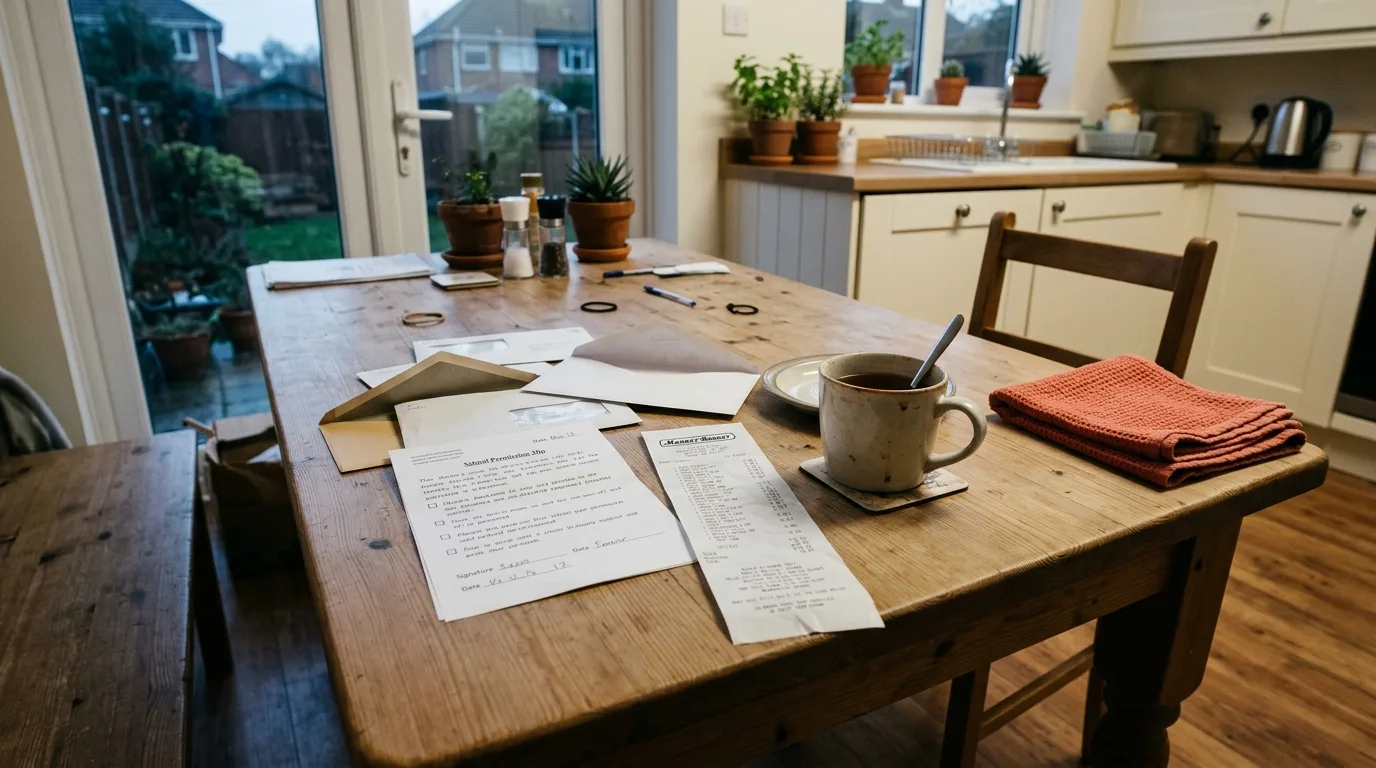
You don't need a perfect Sunday morning ritual. Dump when the loops are loudest and you're tempted to "just remember it."
3am spiral: Grab the phone, open Brain Dump, and speak quietly. Don't organize. Don't assign. Get the inventory out of your head so you can sleep.
Sunday spiral: The week-ahead dread. Dump school logistics, meals, appointments, emotional labor you've been silently holding then stop before you start planning the whole week alone again.
Midweek spiral: Something broke the plan (sick kid, travel, a card that keeps slipping). Dump the new noise before it becomes another private spreadsheet in your head.
If you're comparing mental-load tools and chore apps on iPhone, Mental Load Apps for iPhone is a useful companion read. This piece stays on the dump → cards path.
Speak or type: empty without sorting
In FairShare, Brain Dump (the "Dump it all out" step) is deliberately low-friction. Speak or type everything swirling around. You are not filling blank forms. You are not deciding who owns what yet.
Useful dump habits:
Say the incomplete thoughts: "someone needs to deal with summer camp," "that weird fridge smell," "I keep remembering the car registration."
Include recurring domains and one-offs in the same pass. AI can draft cards; you'll drop or merge later.
Stop when the pressure drops — not when the list looks tidy. Tidying is the next screen's job.
FairShare's AI sorts the noise into clear household card drafts and can suggest who should own each one. Nothing is added to your board until you approve. That approve gate is the difference between a dump that still belongs to you and a dump that becomes shared, visible ownership.
Approve AI card drafts (edit owners, merge, drop one-offs)
This is where the mental load dump becomes useful. Review the drafts like an editor, not like a perfectionist.
Edit owners. Accept a suggestion, switch it, or keep a card on you for now if you're starting solo.
Merge overlaps. "Groceries," "meal plan," and "what's for dinner" often belong on one domain card, not three nagging lists.
Drop one-offs. A single Amazon return or a one-time RSVP might not deserve a lasting card. Keep the recurring, invisible domains.
Check what "done" means. Cards can spell out a minimum standard so "handle dinner" means the same thing to both of you later.
Approve only what you're willing to see on the board. You can always dump again when new loops show up — you should not rebuild the whole household from scratch every Sunday.
Solo board first vs invite now
FairShare works solo. Many people start alone on purpose: dump, approve cards, stabilize a board that finally shows what you've been carrying. That solo board is already valuable. It turns private anxiety into a visible deck.
Invite when the board is clear enough that a partner can react to cards instead of your 3am rant. Partner invite is one tap — send a link by Messages or WhatsApp; they install, tap, and see the same deck. If you want the invite mechanics (universal HTTPS links, App Store fallbacks), use How to Invite Your Partner to a Household App.
Product guidance is practical here: start solo if your partner isn't ready. Your Brain Dump and solo board still help, and partners often join once the load is laid out in plain sight. You do not need a perfect joint onboarding night before your first dump.
Mistakes that keep the load stuck on you
Sorting while dumping
If you pause every sentence to categorize, assign, or argue with yourself about fairness, you never empty the loops. Dump first. Approve second. Negotiate third.
Dumping forever with no owners
A living Notes doc of household dread is still your mental load, just typed. The point of FairShare's Brain Dump is the card draft + approve step. If nothing gets an owner, you're still the default manager.
Redoing the full app tour every time
You do not need to restart First Deal, re-explain the whole method, or rebuild every card from a blank slate whenever anxiety spikes. Dump the new noise. Approve a few drafts. Adjust owners. Save the deeper walkthrough for when you're ready to run the rhythm — not when you're mid-spiral.
New to the app? A calm first-week overview lives in FairShare for Beginners: Your First Week Splitting the Mental Load. Use it after your first approved deck, not instead of the dump.
Next: one short check-in after the deck exists
Once cards are on the board, the next move is small: a short weekly check-in to see who's carrying what, swap what isn't working, and lock next week before resentment builds. FairShare's loop is dump → deal cards → rebalance weekly — not dump → dump → dump.
For the start-to-finish path from setup through that first check-in, follow From First Open to First Check-In: A FairShare Walkthrough. Tonight (or this Sunday), keep the bar lower: one mental load brain dump, approve the drafts, leave partner invite optional until the deck feels real.
Ready when you are — start solo, dump it all out, and turn the spiral into ownership cards you can actually hand off.
Keep reading
More FairShare guides


Written by the FairShare team. Drafted with AI assistance and reviewed by a human editor before publishing.