

Ask most couples who does more around the house and you'll get two different, equally sincere answers. That's not because someone's lying. It's because the work that actually exhausts people rarely shows up on a chore chart. Noticing the pediatrician appointment is due, researching which daycare has openings, remembering that the school photo order form is due Friday — none of that is a task you can check off. It's a layer underneath the task, and it's almost always invisible until it isn't.
The Problem With "Just Tell Me What to Do"
A lot of household apps assume the problem is task distribution: assign the dishes to one person, the laundry to another, and balance is restored. But that assumes the hard part is doing the task, when for most households the hard part is everything before it — noticing it needs to happen, figuring out how, and holding it in your head until it's done. When one partner keeps saying "just tell me what to do" and the other keeps feeling like the household's full-time project manager, both people are describing a real experience. They're just describing different layers of the same job.
FairShare starts from that observation instead of from a chore list. It's built on Fair Play–inspired thinking about who owns the mental load, and it turns that thinking into something you can actually look at together instead of argue about in the abstract.
What a Card Actually Owns
The core unit in FairShare is the card, and each one is deliberately bigger than a task. A card like "Birthday Parties" or "Car Maintenance" covers three stages: Conceive (noticing it needs to happen and when), Plan (figuring out the how — which vendor, which mechanic, which date), and Execute (actually doing it). Whoever holds the card holds all three. That's the detail that separates this from a chore chart. A chore chart can tell you that Sam booked the dentist appointment this month. It can't tell you that Alex was the one tracking, three weeks earlier, that it was almost time to book it.

The exhausting part was never the errand. It was carrying the errand around in your head until someone finally did it.
Why "Done" Needs a Definition
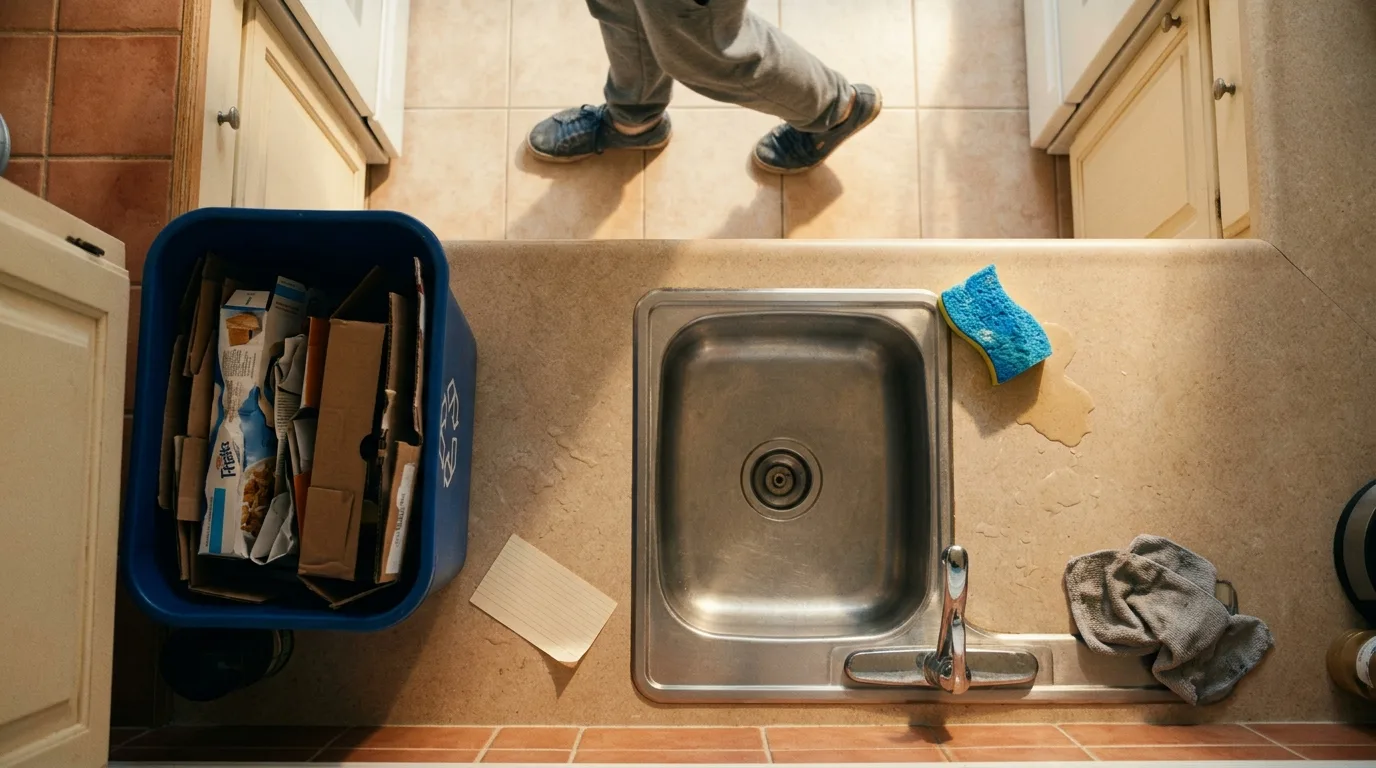
Plenty of arguments about housework aren't really about who did what. They're about what counts as finished. One partner thinks the kitchen is clean; the other notices the sponge wasn't wrung out and the recycling wasn't taken down. Neither is wrong — they're working from different, unstated standards. FairShare's cards include a Minimum Standard of Care, written down on the card itself, so "done" isn't a moving target decided after the fact. It's agreed on before the work happens, which means finishing a card doesn't quietly reopen the argument.
This is also where the weekly check-in earns its place. Standards drift — a newborn changes what "clean enough" means, a new job changes what "on time" means — and FairShare's 15-minute rhythm gives couples a scheduled moment to catch that drift instead of discovering it mid-argument. For a closer look at how that rhythm actually plays out session to session, the Fair Play guide for couples on iPhone walks through it in more depth.
The Check-In Is the Point, Not a Feature
It's tempting to treat the weekly check-in as a nice add-on to the card system. It's closer to the reason the card system works at all. Cards without a regular renegotiation point tend to calcify — whoever ends up holding the "Meal Planning" card in month one is often still holding it in month six, fair or not, just because there was never a natural moment to say "can we swap this." The check-in is that moment, built in on purpose. Short prompts ask what shifted, what should swap, whether a standard needs updating, all without waiting for resentment to force the conversation. The FairShare playbook for setting up cards and running a first check-in is a good next stop if you want the mechanics spelled out step by step.

Built for the Household You Actually Have
None of this works if it takes a negotiation just to get your partner into the app. FairShare's invite is a single link — tap it, and if the app's installed, it opens straight into your household; if it's not, Safari holds the fallback so nothing gets lost in translation. That sounds like a small detail, but the friction of "can you download this thing and set up an account" kills more household experiments than any actual disagreement about chores does. The guide to inviting a partner with links that actually work covers the setup if you're getting ready to send that first invite.
The card set itself isn't fixed either — households don't all run on the same categories, so FairShare's cards flex to whatever yours actually looks like, whether that's two incomes, one, kids, pets, or none of the above. If you're still deciding whether cards, conversation, or a plain chore chart is the right starting point for your household, this comparison of approaches lays out the tradeoffs plainly.
- Cards cover Conceive, Plan, and Execute — not just the doing
- Minimum Standard of Care is written down, not assumed
- Weekly check-ins catch drift before it becomes an argument
- One-tap invite links remove the setup friction that kills most household experiments
- The card set adapts to your household instead of forcing a fixed template
Keep reading
More FairShare guides



Written by the FairShare team. Drafted with AI assistance and reviewed by a human editor before publishing.